- Voter Information (YouTube video)
- How Local Government Works (YouTube video)
- Why Civic Engagement Matters (YouTube video)
- How to get Involved (YouTube video)
- Rules, Roles & Respectful Participation (YouTube video)
- Municipal 101 (Association of Municipalities of Ontario – AMO)
Many complain incessantly about things, like rising costs on everything from housing to services however, when it comes to elections, voter turnout, according to AMO statistics, is in consistent decline:
-
- In 2010 turnout was 44.35%
- In 2014 turnout was 43.12%
- In 2018 turnout was 38.3%
- In 2022 turnout was 36.3%
- 2026 ??
Most people realize that, when it comes to lower-tier municipal governments, the major source of revenue is through property taxes. Thinking about how those property taxes are spent?
To begin with, almost one third of yearly municipal spending in the province of Ontario covers services that are ‘provincial responsibilities‘ in other parts of Canada.
According to AMO, “The provincial government is responsible for determining ‘which services municipalities provide and the methods to fund them’. However, municipalities in Ontario are also unique compared to other provinces because … the government of Ontario has made many social services such as social housing, shelter services, and childcare a municipal responsibility.
Ontario municipalities are also responsible for the following service areas:
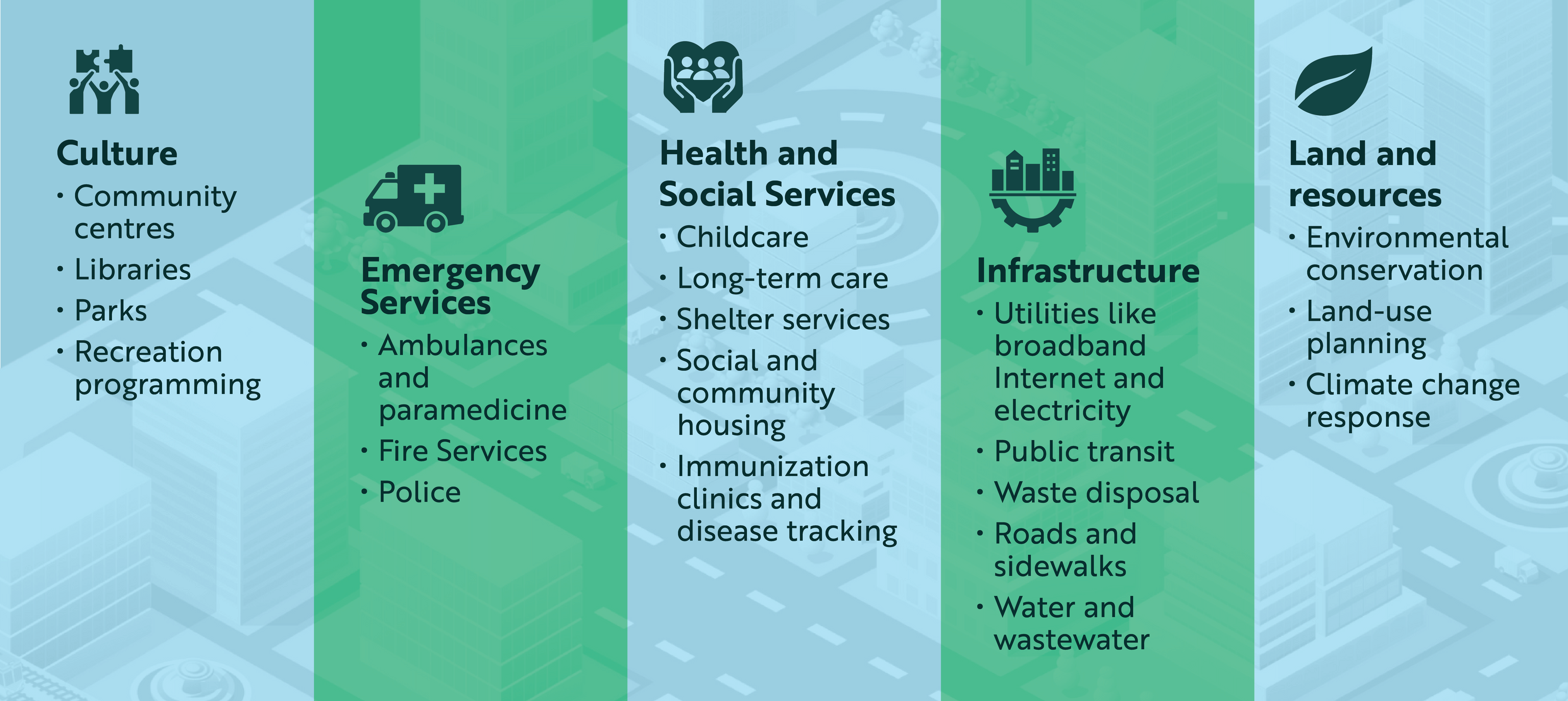
While the Ontario government partially offsets this gap, as of 2022 municipal expenditures in these areas outpaced provincial grants by nearly $4 billion.”
AMO calls on the Province “… to do what taxpayers expect – work together with municipal governments to get it done for Ontarians. Strong and sustainable municipalities mean safe, healthy, affordable and prosperous communities through investments in what Ontarians care about most, including:
- Housing: Municipalities own and operate half a trillion dollars of public infrastructure. Over the next 10 years, they are planning for more than $250 billion of capital expenditures – with around $100 billion related to growth.
- Healthcare: In 2022, municipalities across Ontario spent $3.3 billion on health despite only receiving $1.8 in provincial grants. When public health, long-term care, and ambulance funding don’t keep pace with need, we see the impacts in hospitals across the province.
- Cost of Living: Ontario has the second highest property taxes in Canada, and they continued to rise in 2024 as municipalities dealt with inflation, growth, and issues like homelessness. Property taxpayers – including seniors on fixed incomes and struggling small businesses – simply cannot afford to pay for more.
- Public Safety: Municipal resources fund police forces. The impacts of inadequate approaches to mental health, addictions, and homelessness challenges put police resources under strain.”
There is lots to think about when heading out to vote in this election – the key however, is to do just that … VOTE.
Voting period: Start: Monday, October 19, 2026, at 10:00 a.m. – End: Monday, October 26, 2026, at 8:00 p.m.